Custom sensor solutions developed and manufactured in-house

Meeting: Binsack
Binsack Reedtechnik develops and manufactures float switches, suction lances, flow monitors, reed sensors, and reed relays for industrial applications. Our solutions are tailored to your technical requirements—including the medium, installation space, switching point, material, connection, and planned production volume.

We support you from the initial technical consultation through prototyping and approval to reproducible mass production.
Request a Development Project
Float switches: Standard projects typically start at 50 units  
Suction lances: Production runs typically start at 10 units  
Samples and Prototypes Following Technical Review
Since 1993—Development and manufacturing in Mühlheim am Main
Over 17.9 million sensors in use
From sample to series production

Your Benefits in Development and Production

Technical advice

Design based on your actual operating conditions.

Adaptation to the medium and installation space

Material, dimensions, and function tailored to the application.

Samples and Approval

Technical testing prior to the start of mass production.

Reproducible Mass Production

Specified design and documented product features.

In-house manufacturing at the Mühlheim am Main facility

By integrating development and manufacturing, technical requirements can be tailored to cost-effective and repeatable mass production as early as the design phase.

Depending on the product and project, our manufacturing processes include, among other things:

Tool manufacture

Fixtures and tools for custom components and recurring production processes.

Plastics processing

Manufacture and processing of technical plastic parts for float switches, suction lances, and other sensor assemblies.

Cable Assembly

Adapting cable lengths, cable types, connectors, and pin assignments to the specific application.

Ultrasonic welding

Reliable joining of suitable plastic components without additional screw or adhesive fasteners.

Mechanical processing

Machining and modifying components, connections, and geometries in accordance with the technical drawing.

Assembly

Assembly of custom sensors and subassemblies in the approved production version.
By integrating development and manufacturing, we can tailor technical requirements early on to ensure cost-effective and repeatable mass production. Short communication channels between design, manufacturing, and quality assurance enable the efficient implementation of customer-specific solutions.

What products does Binsack develop and manufacture?
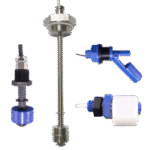
Binsack Float Switch Overview

Float switches

Custom float switches for monitoring liquid levels. Customizable features include, among others, the design, material, switching point, thread, cable length, and electrical configuration.
Typical Requirements
- vertical or horizontal installation orientation
- Plastic or stainless steel
- one or more switching points
- limited installation space
- special media
- custom connections

View Float Switches
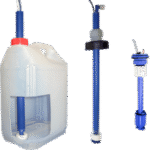
Overview of Suction Lances and Canisters

Suction pipes

Suction lances for dispensing media from canisters, drums, and IBC containers. Depending on the model, empty detection, backflow prevention, and custom container connections can be integrated.
Typical Requirements
- Adjustment to container height and container opening
- Empty notification for dosing and conveying systems
- reduced remaining quantity
- materials suitable for the medium
- custom hose and process connections
View Suction Lances
Flow Monitor for Environmental Technology

Flow monitors

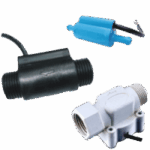
Mechanical flow monitors for monitoring a minimum flow rate. The design is based on the medium, flow range, installation orientation, pressure drop, and desired switching point.
Typical Requirements
- Monitoring of cooling or process circuits
- Dry-run protection
- Enable signal when the minimum flow rate is reached
- Compact integration into existing lines
View Flow Monitors
Reed Sensors Overview: Binsack

Reed Sensors and Reed Relays

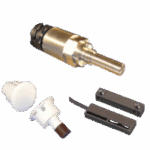
Magnetically actuated switching solutions for position, limit, and signal monitoring, as well as for galvanically isolated switching applications.


Typical Requirements
- Defined switching distance
- Compact design
- Custom cables and connectors
- Adaptation to the magnet, mounting orientation, and electrical load
- Use in industrial mass-produced products
View Reed SensorsView Reed Relays

Our Development Process

1. Record technical requirements

To begin with, we clarify the actual operating conditions. These include, among other things:
- Product category and desired function
- Medium and concentration
- Temperature and pressure range
- available installation space
- Mounting and process connection
- desired switching point
- electrical load and interface
- Cable or connector specifications
- planned annual and total quantities

The more complete this information is, the faster the technical feasibility can be assessed.

2. Assess feasibility and explore possible solutions

Next, we assess whether an existing product platform can be adapted or whether a more complex custom design is required.

In particular, the following are evaluated:
- mechanical integration
- Material compatibility
- Operating Principle
- electrical load capacity
- manufacturing-friendly design
- Testing and Documentation Requirements
- economic feasibility of the planned series

The goal is not the most technically complex solution, but rather the one that is functionally and economically suitable for the application.

3. Design the product from a technical standpoint

The relevant product features are determined based on the requirements.

These may include:
- Dimensions and Geometry
- Switching point and switching function
- Float or sensor version
- Materials of the parts in contact with the medium
- Mounting and process connection
- Cables, connectors, or connecting wires
- Number of switching points
- Installation orientation
- electrical specifications

Critical characteristics are clearly defined as early as this phase.

4. Create a sample or prototype

Before a product is approved for mass production, it may be advisable to conduct a prototype or sample phase. This phase is used to verify whether the product is mechanically, electrically, and functionally suitable for its intended application.

For example, a sample is used to check:
- Installation Space and Assembly
- Connection compatibility
- switching point
- Freedom of movement
- Cable installation
- Media Contact
- Function within the overall system

The specific nature and scope of sampling are determined on a project-by-project basis.

5. Review and Approval

The agreed-upon product characteristics are tested prior to mass production. The type and scope of the testing depend on the product, its application, and customer requirements.

Possible inspection characteristics include:
- Switching function
- switching point
- electrical parameters
- Dimensions
- Leak-tightness
- Cable length and pin assignment
- mechanical function
- unique product assignment

Once technical approval has been granted, the production version is finalized.

6. Mass Production and Long-Term Supply

Once approved, the product is manufactured according to the agreed-upon specifications. The goal is to ensure consistent quality across recurring shipments.

Changes to materials, geometry, connections, or function are not considered in isolation, but are evaluated in terms of their impact on the entire application.

If necessary, the following may also be agreed upon:
- custom labeling,
- defined packaging units,
- technical documentation,
- Test reports,
- on-demand or volume-based delivery models.
Send technical specifications


Example: Float switch for limited installation space

Background:
A equipment manufacturer needed a level-limit monitoring system for a compact tank. A standard float switch interfered with the tank's internal geometry.

Requirements:
- maximum outer diameter
- specified installation length
- fixed switching point
- Medium and Temperature
- existing threaded connection
- Desired cable length
- Planned annual volume

Solution:
An existing product platform was modified in terms of float diameter, installation length, connection, and cable configuration.

Result:
- Integration without an additional adapter
- defined switching point
- approved sample
- Reproducible mass-production version
Custom Float Switches

Quality begins with development

Product quality isn't just the result of final inspection. It begins with clear technical specifications and a design optimized for manufacturing.

For each project, the following should therefore be determined early on:
- which product features are critical to functionality
- what tolerances are required
- how the function is tested
- what data must be documented
- which changes require approval

This approach helps reduce misunderstandings between development, purchasing, manufacturing, and subsequent use.

Development for Production Customers

Binsack focuses its custom solutions primarily on industrial mass-production applications.
Collaboration is particularly suitable when:
- a standard product does not fit mechanically
- a particular medium requires specific materials
- a custom switching point is required
- Cables, plugs, or connectors need to be adjusted
- a solution should be provided that is sustainable and reproducible
- technical coordination and sample submission are required
A custom design is less suitable when the goal is simply to find a single, readily available standard part at the lowest possible unit price.

Typical Project Sizes
- custom float switches: typically in quantities of 50 or more,
- Custom suction lances: typically 10 units or more
- Samples and prototypes following technical and economic evaluation.

The actual minimum order quantity depends on the scope of customization and any necessary tooling or development costs.

Do you need a sensor that's right for your application?

Please send us any available technical data, drawings, or a brief description of your application. We will determine whether an existing product platform can be adapted and what information is needed for further design.

Direct Contact with Technical Support

Don't have all the technical specifications yet?
No problem. Send us a sketch, photo, drawing, or the key specifications. Our technicians will determine which design is technically feasible.
B. Jäger - Binsack

FAQ on Development and Manufacturing