
Float switches for environmental technology & water treatment
Continuous operation without downtime:
Rugged sensors for demanding environmental and water treatment systems.
Our custom-made float switches, based on modern reed switch technology, offer maximum precision—even when in constant contact with aggressive chemicals, acids, and alkalis.
We are not a distributor:By handling our own design and production in Germany, we ensure maximum flexibility, fast delivery times, and consistent quality standards for medium-sized companies, municipalities, and plant engineering firms with 50 to 5,000 employees.
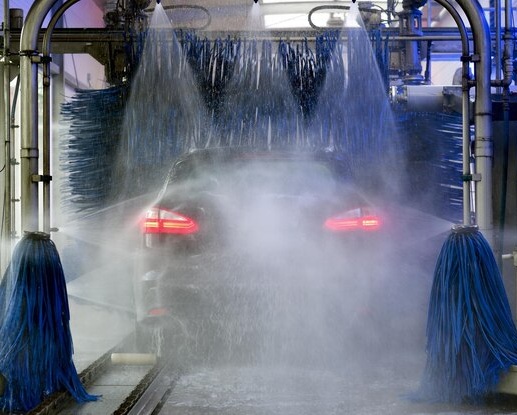
Core technical expertise: Customized flexibility and precision
| Technical Specifications | Specifications / Available Options |
|---|---|
| Applications | Process water treatment, industrial washing systems, environmental technology |
| Chemical resistance | Chemicals, acids, alkalis, cleaning agents, drinking water |
| Available materials | Polypropylene (PP), polyamide (PA), polyethylene (PE), V2A stainless steel (1.4301), V4A stainless steel (1.4404 / 1.4571) |
| Number of switching points | Up to 3 switching points can be integrated (e.g., minimum, maximum, overflow protection) |
| Additional features | Optional temperature measurement via integrated Pt100 / Pt1000 |
| Degrees of protection (IEC 60529) | IP67 / IP68 (depending on the model and cable gland) |
| Certifications | KTW Certification / Suitability for Drinking Water |
| Process connections | Flexible threaded connections, flanges, custom special connections |
| Country of origin | Germany (Made in Germany) |
We manufacture custom cable lengths and offer flexible process connections, such as flanged or threaded connections, designed to fit challenging installation spaces and existing plant designs.
Design and procurement benefits for your target audience
Design freedom & media compatibility
Choose from durable plastics (PP, PA, PE) or high-performance stainless steels (V2A 1.4301 / V4A 1.4404 and 1.4571).
Depending on the application and requirements, we supply sensors with IP67 or IP68 protection ratings for continuous underwater use.
For sensitive applications, models with KTW certification are available, which are fully suitable for drinking water.
Thanks to our production facilities in Germany, we guarantee short, reliable delivery times—even for custom modifications.
Take advantage of attractive terms and guaranteed supply reliability through customized framework agreements for your volume production.
For sensitive applications, models with KTW certification are available, which are fully suitable for drinking water.
Our system solutions for water and environmental technology
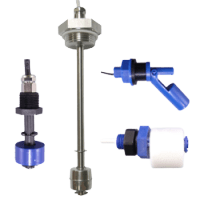
Heavy-duty float switches
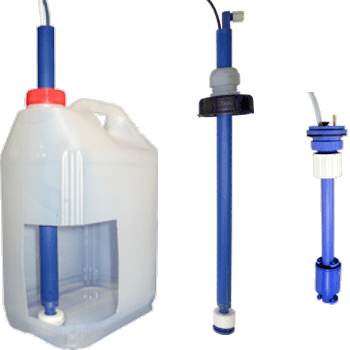
Custom-made suction lances
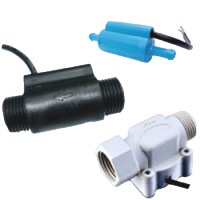
Precise flow monitors
Sustainability and quality, guaranteed
Our industrial facility operates strictly in accordance with the highest standards:
Documented sustainability and resource-efficient manufacturing right here at our facility.
Guarantees complete traceability, durable materials, and reproducible precision in every production run.
Why planners, local governments, and buyers trust Binsack Reedtechnik:
No loss of quality due to intermediaries. We handle special requests regarding cable lengths, switching points, or housing designs directly in Mühlheim.
Designed for harsh industrial environments:
We use high-quality, corrosion- and chemical-resistant plastics and stainless steels that switch precisely even when exposed to adhering media or extreme temperatures.
Process reliability for your supply chain:
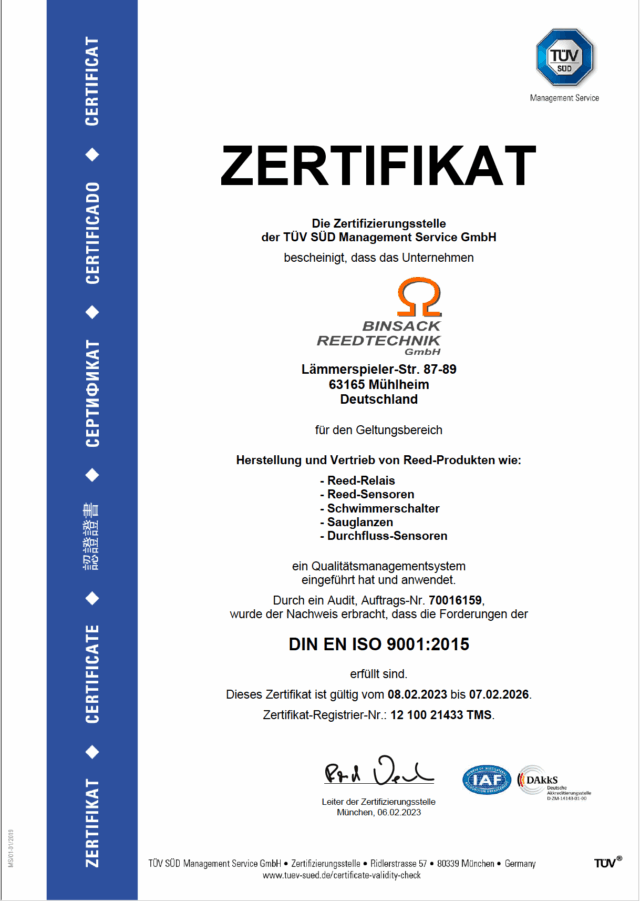
Our ISO certifications meet the strict compliance requirements of municipal utilities, large special-purpose associations, and international plant manufacturers.
Rapid prototyping & production flexibility:
Whether it’s a custom-fit replacement part for an existing system or high-volume original equipment (OEM) for mechanical engineering—we deliver quickly and flexibly.

Your direct line to our technical experts
Avoid lengthy email exchanges. In a direct conversation with our engineers, we can clarify connections, materials, and switching points in just a few minutes.
Contact – Direct & Competent.

FAQ: Float Switches for Water, Wastewater, and Environmental Technology
Which float switches are suitable for water treatment, wastewater systems, and pump stations?
Robust float switches are ideal for water treatment, wastewater systems, pumping stations, tanks, wells, and pump sumps, as they are designed for continuous level monitoring, full-level signaling, low-level signaling, level control, and dry-run protection. Key factors to consider include the medium, degree of contamination, temperature, installation position, switching point, cable length, and electrical interface to the control system.
Binsack Reedtechnik develops and manufactures float switches for demanding applications in water, wastewater, and environmental technology. This allows for designs tailored to the specific system, medium, and desired switching function—ranging from individual level switches to custom solutions for industrial plants or municipal infrastructure projects.
When is a custom float switch a better choice than a standard switch?
A custom float switch is recommended when standard products do not fit the system exactly—whether due to mechanical, electrical, or fluid-related factors. This applies, for example, to specific cable lengths, defined switching points, special housing designs, aggressive or contaminated fluids, tight installation spaces, existing pump controls, or requirements specified in tenders.
For engineers, project managers, and technical buyers, a custom design is particularly important when downtime, false alarms, or unsuitable materials can lead to high long-term costs. With development and manufacturing from a single source, the float switch can be tailored directly to the tank, container, pump sump, dosing system, or OEM system.
What technical specifications are required to select the right float switch?
For a technical design, information is primarily required regarding the medium, the tank, the installation location, and the desired switching function. Important factors include, for example, the fluid, temperature range, pressure conditions, contamination, chemical exposure, tank material, installation orientation, desired switching point, cable length, connection type, switching voltage, switching current, and whether the switch is a normally open or normally closed contact.
Sketches, photos, drawings, or existing data sheets for the current solution are also helpful. The more detailed the technical specifications are, the more precisely the float switch can be designed for level monitoring, dry-run protection, or full/empty signals. Even incomplete inquiries can be technically evaluated if the key operating conditions are known.
What materials are suitable for float switches used in corrosive media or contaminated water?
The appropriate materials depend on the medium, chemical exposure, temperature, and mechanical requirements. In water, wastewater, and environmental engineering, corrosion- and chemical-resistant plastics, stainless steel components, suitable seals, and media-resistant cables are used, depending on the application.
When dealing with aggressive liquids, cleaning chemicals, adhesive media, or contaminated water, the choice of materials should not be based solely on price. It is crucial that the float, shaft, seal, cable, and connection remain durable over the long term. For this reason, media compatibility should be assessed as early as the quotation phase, particularly for municipal facilities, special-purpose associations, dosing systems, and industrial environmental technology.
Can float switches be integrated into existing pump control systems, tanks, and dosing systems?
Yes, float switches can be integrated into many existing tanks, basins, pump sumps, dosing systems, and control systems, provided that the mechanical installation conditions and electrical interface are compatible. Key considerations include the installation position, switching point, connection thread or mounting type, cable routing, connector type, switching logic, and compatibility with the existing control system.
For retrofit projects, replacement parts, and upgrades, it is important that the new solution fits reliably into the existing system. Binsack Reedtechnik can adapt float switches, suction lances, or flow monitors to existing installation configurations if photos, sketches, dimensions, or data for the previous component are available.
Which float switches are suitable for corrosive chemicals and car washes?
For use in industrial washing systems that handle acids or alkalis, float switches made of V4A stainless steel (1.4571) or durable plastics such as PP (polypropylene) and PE are suitable. The choice of material must be precisely matched to the chemical concentration and process temperature.
Can a float switch measure both liquid level and temperature at the same time?
Yes. Our float switches for environmental technology can be equipped with up to three switching points and can optionally be combined with a thermal sensor (Pt100 or Pt1000). This allows for combined level and temperature monitoring through a single mounting opening.
Are the float switches certified for use with drinking water?
Yes, we manufacture specific models with KTW certification. These level sensors are physiologically safe and are specifically designed for use in drinking water and pure water applications.
Why is reed technology particularly safe in industrial plant engineering?
Reed technology uses contacts that are hermetically sealed inside the tube and are switched without physical contact by the magnet in the float. Since there are no exposed mechanical components, the system requires very little maintenance, is resistant to contaminants in the process water, and effectively prevents unplanned downtime.
Why is a German manufacturer of float switches advantageous for municipalities, special-purpose associations, and plant engineers?
A German manufacturer offers technical advantages when float switches, suction lances, or flow monitors need to be not only purchased but also precisely tailored to a specific system. Direct contact with the R&D and manufacturing departments makes it easier to address special requests, technical edge cases, material questions, cable lengths, switching points, and housing options.
For municipalities, special-purpose associations, municipal utilities, and plant manufacturers, it is also important that delivery reliability, documentation, traceability, and quality assurance are assured. A manufacturer with its own production facilities can address technical inquiries more quickly than a mere distributor and offers greater flexibility when it comes to spare parts, bulk orders, and OEM projects.
What is the significance of ISO 9001 and ISO 14001 in the field of sensor technology for water, wastewater, and environmental engineering?
ISO 9001 and ISO 14001 are certifications that are important in supplier management for many technical buyers, local governments, municipal utilities, special-purpose associations, and plant manufacturers. ISO 9001 ensures documented quality management processes, consistent manufacturing, and traceable procedures. ISO 14001 ensures systematic environmental management and resource-efficient processes.
Such certifications are particularly important in the fields of water, wastewater, and environmental technology, as sensors are often used in critical systems. In the context of tenders, supplier audits, production approvals, and compliance reviews, certifications can provide additional assurance of a manufacturer’s technical and organizational competence.
What is the process for submitting a technical inquiry regarding float switches, suction lances, or flow monitors?
A technical inquiry should ideally begin with the key details regarding the application. These include product type, medium, temperature, installation conditions, desired function, switching point, electrical specifications, cable length, connection type, quantity, project status, and any available drawings or photos. A defective sample part, an old data sheet, or a simple sketch can also be helpful for the technical review.
Once the inquiry is received, we assess which design is technically appropriate: a standard switch, a customized version, or a custom solution tailored to the customer’s needs. The goal is to provide a robust, reliable, and cost-effective solution for the specific application—whether for municipal water treatment, special-purpose associations, industrial environmental technology, plant engineering, or OEM series production.