
Flow monitor: Dry-running protection for your pump

Custom flow monitoring that integrates seamlessly into your system
Our technology detects stoppages or leaks and enables immediate intervention without the need for additional sensors.
We do not supply standard devices, but application-specific solutions for your flow monitoring - adapted to the medium, installation situation and signal processing.
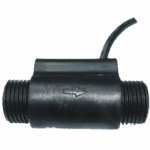
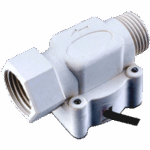
Flow monitor suitable for your system
For Design Engineers
Installation in any orientation:
Maximum flexibility in system design.
CAD data & support:
Fast project planning thanks to direct technical support.
For Technicians
Wear-free reed contact technology (IP65/IP67).
Maintenance-free:
No auxiliary power required for switching.
Media resistance:
Housing materials suitable for water, oils, and aggressive media.
For Buyers
Scalable solutions for OEM needs.
Durability:
Reduced TCO (Total Cost of Ownership) thanks to high switching cycles.
Direct from the manufacturer:
Short lead times and an attractive price-performance ratio.
Technical Specifications
Mechanical flow monitors
Flow switch Functional diagram

Product examples

- Reliable flow detection
- No permanent current required


Technical Inquiry
Send us your requirements, a drawing, a photo, or the key specifications.
We'll determine whether a standard solution is sufficient or if a custom design is the better option.

No problem. We'll work with you to determine what information is needed.
Frequently asked questions about flow monitoring
How does a mechanical flow monitor work?
A movable element in the medium ( piston with magnet ) is deflected by the volume flow and switches the reed contact from a certain position. The signal can be integrated directly into control systems - without an additional power supply. This is often referred to as a flow monitor, flow switch or flow switch.
Effective dry-run protection for pumps and cooling circuits
Our flow monitors detect flow interruptions in real time. As soon as the flow rate falls below the critical threshold, the sensor shuts down the pump or system. This prevents overheating and costly downtime—making them ideal for dosing systems, laboratory equipment, and chemical process engineering.
What is the difference between a flow monitor and a pressure switch?
-
Pressure switch = monitors the operating pressure in the system, switches from a certain switch-on pressure
-
Flow monitor = monitors the movement/flow of the medium.
A pressure switch only detects a blocked pipe indirectly - and only in certain cases.
A flow switchimmediately registers when there is no or insufficient medium flow, regardless of the pressure.
This is why it is used especially where it is crucial to determine whether flow is actually present (e.g. cooling circuits, lubricating oil lines).
It serves as dry-running protection for pump control.
-
What is the difference between a flow monitor and a flow meter?
-
Flow meter = measures the flow rate, usually returns this to the system as a frequency, which must evaluate this value
-
Flow monitor = monitors the movement/flow of the medium.
The flow meter requires evaluation electronics. It can determine the flow value relatively accurately within a certain range.
A flow switch, on the other hand, only sends a simple switching signal as soon as a flow is reached.
-
Which installation position is possible?
Many of our flow switches are position-independent. For mechanical variants, we advise on the ideal installation direction to optimize response time and service life.
Can a flow monitor also be used with pulsating currents?
Yes, but the inertia of the sensor must be taken into account. Electronic models with time delay or averaging are often the better choice here.
Can customer-specific switching points be realized?
We offer defined switching points between 0.1 l/min and 2 l/min - tailored to your medium, your line and the desired reaction time.
How is electrical integration into existing systems achieved?
Our models are ready for connection - with cable, plug or open wires. The signal output is a potential-free contact (normally open or normally closed).
Flow monitor, flow sensor, or flow switch?
The terms "flow monitor," "flow sensor," and "flow switch" are often used interchangeably. They generally refer to a switching device that detects a minimum flow rate and sends a signal to the control system if the flow falls below that threshold. Unlike a flow meter, the primary focus is not on the precise measurement of the flow rate, but rather on the reliable monitoring of a threshold value.