
Sensor Solutions for Level, Flow, and Position
From technical design to series production.
Developed, manufactured, and tested in Germany.
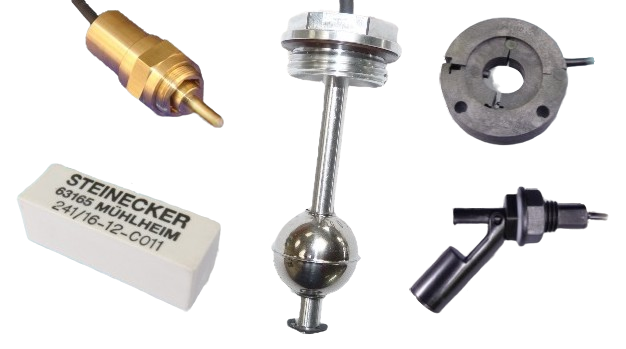
Do you need a sensor that isn't available in the catalog?
Our sensor solutions are used for the reliable detection of fill levels, positions, and switching states—particularly in dosing technology, medical technology, commercial vehicle technology, and mechanical and plant engineering.
We support you every step of the way, from technical consultation through prototype development and testing to series production in Germany in accordance with ISO 9001 and ISO 14001.
- insufficient installation space
- special switching point
- critical medium
- special material requirements
- custom connection type
- mass production requirements with consistent quality
Why do companies work with Binsack?
Our foundation:
- family-run since 1993
- over 17.9 million sensors in use worldwide
- development and manufacturing in Germany
- ISO 9001 and ISO 14001 certified
- prototyping, testing, and series production—all from a single source
- in-house manufacturing with short coordination channels
This reduces:
- Voting effort
- Integration risks
- Change loops
- Installation problems
- Uncertainty before the start of production

When standard sensors are not sufficient
However, in many projects, this is not the case.
- The sensor does not fit properly into the assembly mechanically.
- The switching point is not in the correct position.
- The material is not suitable for this medium.
- The connection does not fit the existing structure.
- Design, development, and procurement teams waste time on follow-up questions and compromises.
Binsack will conduct a technical review of your application and, if necessary, develop a suitable design.
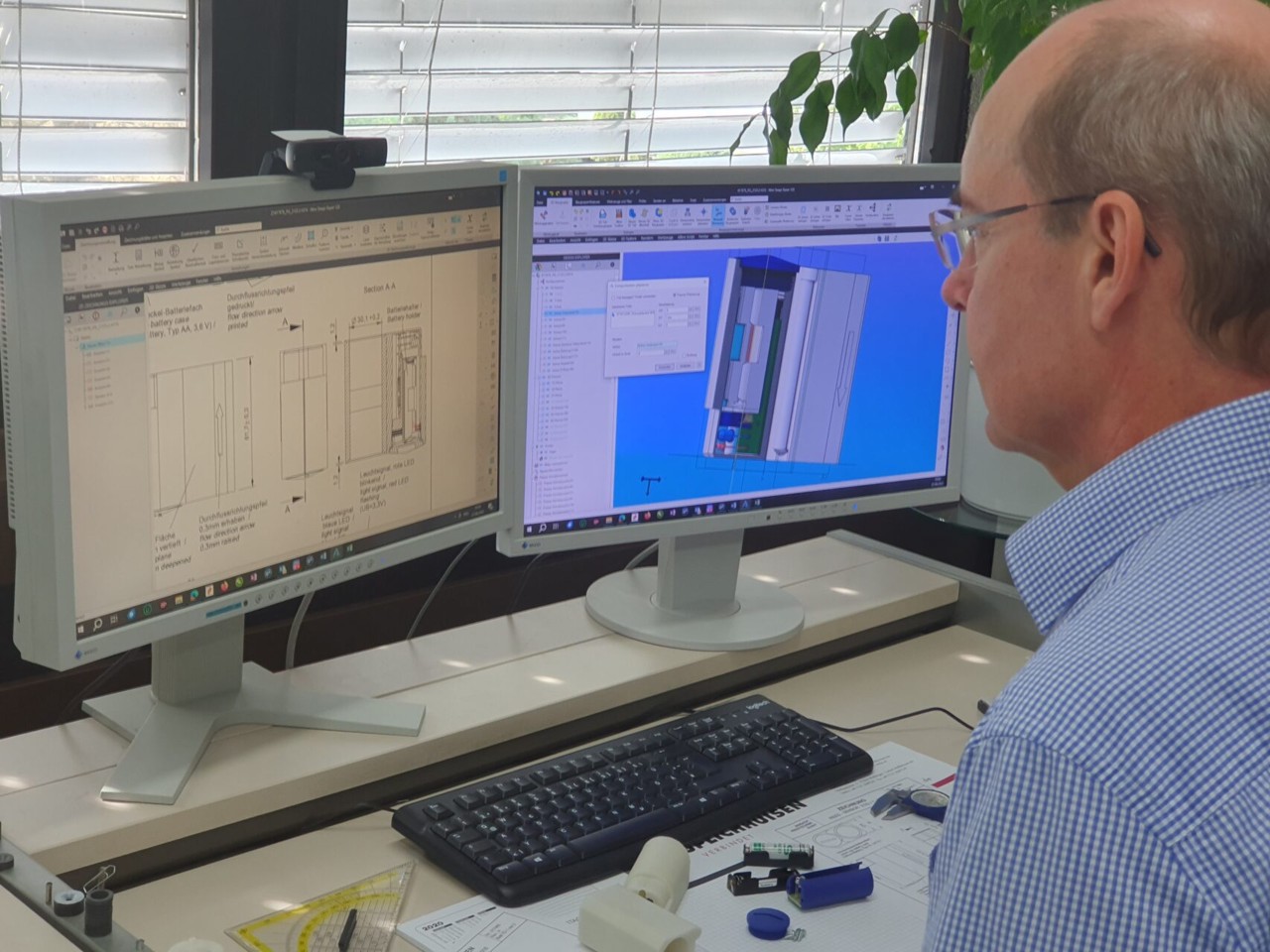
Services for Design Engineers, Developers, and Purchasing Professionals
· Mounting orientation
· Fastening
· Connection concept
· Material selection
· Design integration
Goal: fewer design compromises and better fit in the product.
· Prototyping
· Functional tests
· Adjustments before approval
· Evaluation of feedback from installation trials
Objective: a reliable solution before production begins.
· Predictable mass production
· Quick decision-making processes
· Tested quality from German manufacturing
Goal: reduced procurement risk and a reliable solution for recurring needs.
Sensors as a protective feature
A properly designed sensor solution can help detect critical conditions early on, for example:
· Dry running
· Malfunctions
· Shutdown
· Rework
· Unnecessary maintenance
· Damage to pumps, systems, or equipment
That is why sensors should not be selected only at the end of the design process.
The sooner the installation space, medium, switching point, and connection are determined, the lower the risk of having to make changes later on.
Here's How a Project Works
Faster clarification instead of searching through catalogs.
When a standard sensor isn’t a good fit, engineering and purchasing teams often waste time poring over data sheets, asking questions, and making compromises.
We’ll conduct a technical review of your application right away to determine which sensor solution is practical, feasible, and ready for mass production.
Standard sensor or custom solution?
| Standard Solution | Binsack Custom Sensor Solution |
|---|---|
| Rigid design with no customization options | Customized design, connection types, material, and switching points |
| Limited customization | Customization of design, connection, material, and switching point |
| Unclear series adjustment | Prototyping, Testing, Approval, and Mass Production |
| Often multiple interfaces | Direct technical contact at the manufacturer |
| Might be roughly right | Checked for medium, installation space, and installation |
If a custom design makes sense, we'll engineer it to meet the technical requirements.
Development and manufacturing under one roof
In-house manufacturing, short lead times, and pre-shipment testing make projects easier to plan.
Our manufacturing capabilities
Quality for Mass Production
That is why we view custom sensor technology not merely as a single component, but as a mass-produced part with clear requirements for manufacturing, testing, and supply.
Download: Certificate
Download: Certificate
Examples from Series Applications
Float switches, suction lances, and other sensor solutions
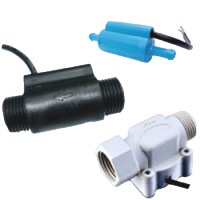
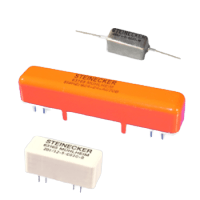
In addition, we develop and manufacture flow monitors, reed sensors, reed relays, and floats for standard technical applications.



-based fluid monitoring in rail vehicles

Steering Monitoring in Commercial Vehicles

's Coolant Monitoring System in Commercial Vehicles

's Water Level Monitoring System for Dishwashers

e Flow Monitoring in Medical Devices
Industries and Applications
Automation
Automotive & Transport
Household appliances
Hygiene technology
Agriculture
Mechanical engineering & equipment manufacturing
Medical technology
Measurement technology
Discuss the application
Are you looking for a sensor solution for level, flow, media sampling, or position?
Send us your key specifications, a sketch, a photo, or a drawing.
We’ll determine whether a standard solution is sufficient or if a custom design is more appropriate.
Technical Inquiry
Send us your requirements, a drawing, a photo, or the key specifications.
We'll determine whether a standard solution is sufficient or if a custom design is the better option.

No problem. We'll work with you to determine what information is needed.
Frequently Asked Questions About Custom Sensor Solutions
When is a standard sensor no longer sufficient?
A standard sensor is insufficient when specific requirements apply—for example, when installation space is limited, the temperature range falls outside the standard range, the medium to be measured is unique, or the installation orientation differs from the standard. A customized solution is also often advisable when there are special requirements regarding materials, leak tightness, or integration into production lines.
What information is needed to design a sensor?
The following information is particularly important for an initial technical assessment:
- Medium
- Temperature range
- Installation scenario
- desired function
- Switching point or switching range
- electrical interface
- Quantity or annual requirement
What is the process for a project, from the initial inquiry through to mass production?
Typically, the project begins with a technical clarification of the requirements. This is followed by a proposed solution, including a prototype if necessary. The solution is then tested and approved. Once approved, mass production begins.
Can existing sensors be modified?
Yes. In many cases, an existing solution can be customized—for example, in terms of length, switching point, material, connection, mounting, or housing design. This is often more cost-effective than developing a completely new product from scratch.
Is it possible to build prototypes before production begins?
Yes. Prototypes are useful when the installation situation, functionality, or suitability for specific media need to be tested before production is approved. This helps reduce technical risks and minimizes the need for subsequent rounds of revisions.
What are the benefits of having development and manufacturing under one roof?
Short communication channels between development, manufacturing, and testing facilitate implementation. Changes can be evaluated more quickly and incorporated into prototypes or production runs.
What applications are level, flow, and position sensors suitable for?
Typical applications include level monitoring in tanks, flow monitoring in industrial systems, and position detection for valves, doors, limit switches, or moving components.
Is mass production also possible for OEM projects?
Yes. For OEM projects, it is crucial that technical design, approval, quality assurance, and delivery capability are taken into account early on. Binsack supports these aspects from the initial technical clarification through to series production.
For which industries does Binsack develop sensor solutions?
Binsack develops sensor solutions for technical B2B applications, including medical technology, hygiene technology, mechanical engineering, equipment manufacturing, commercial vehicles, and household appliances.
Technically reviewed by Binsack Reedtechnik GmbH – Development and technical consulting for reed sensors, float switches, and custom sensor solutions.